Understanding the Curious Maine Coon
The Complete Guide to Feline Hazards: Maine Coon Kitten-Proofing Your Home
Bringing home a Maine Coon kitten is one of the most meaningful parts of the adoption journey. You’ve likely spent weeks preparing, gathering supplies, choosing a name, and counting down the days until your new companion arrives.
Before your kitten steps through the door, it’s worth taking a moment to see your home the way they will.
Maine Coons are unlike many other cats. They are intelligent, athletic, and intensely curious. They don’t simply observe their environment, they interact with it. Cabinet doors become puzzles, countertops turn into lookout points, and anything within reach quickly becomes worth investigating.
This is where Maine Coon kitten proofing becomes essential. It isn’t about creating a perfect home, but about anticipating curiosity before it becomes risk. By identifying common hazards early, you create a safer, more confident transition for your kitten.
In this guide, we’ll walk through the most common household dangers for Maine Coons, from toxic plants and foods to hidden physical risks, and share practical ways to prepare your space with intention and care.
At Solstice Cats, we always encourage families to complete their kitten proofing before pickup day. Maine Coons are quick learners and often discover household hazards long before we expect them to.
Quick Maine Coon Kitten Proofing Checklist
✔ Remove toxic plants
✔ Secure window screens
✔ Hide cords and strings
✔ Store cleaning products safely
✔ Eliminate access to toxic foods
✔ Create a dedicated safe room
✔ Secure cabinets and high shelves
✔ Provide safe climbing and scratching spaces
Understanding the Curious Maine Coon
The “Paws-On” Breed
If you’ve never shared your home with a Maine Coon before, you’ll quickly understand why they’re often described as the dogs of the cat world.
Maine Coons are known for their intelligence, confidence, and problem-solving instincts. Many learn to open cabinets, slide doors, and access areas most cats never attempt. Their size and agility also allow them to reach spaces that feel well out of reach.
This combination of curiosity and capability means that standard cat proofing often needs to be taken a step further.
Looking Beyond Standard Cat Proofing
When preparing your home for a Maine Coon, it helps to think in vertical layers rather than floor level spaces.
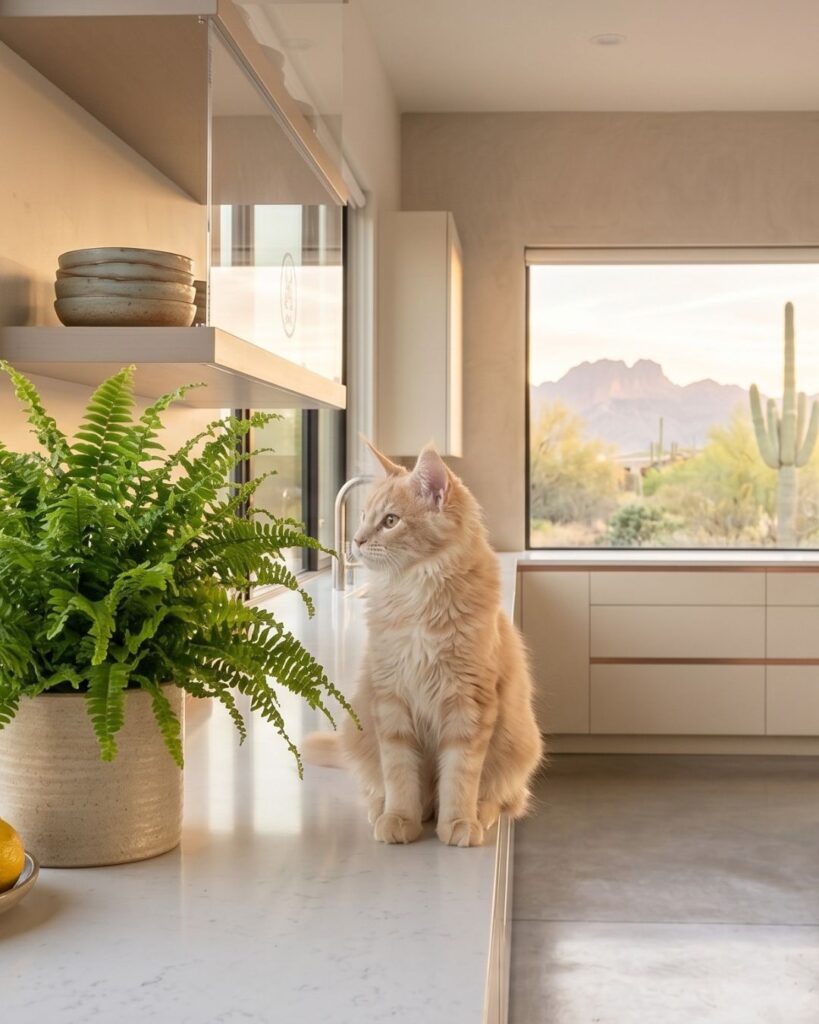
Kitchen counters, bookshelves, refrigerator tops, entertainment centers, and window ledges all become part of their explored world. As kittens grow, so does their confidence and ability.
A helpful exercise is simply to pause in each room and ask:
- What could be reached from a chair, stool, or cat tree
- Are there plants or décor on elevated surfaces
- Could a cabinet or drawer be opened with a paw
- Is anything fragile, toxic, or unsafe within jumping range
Seeing your home through this lens is one of the most effective ways to prevent accidents before they happen.
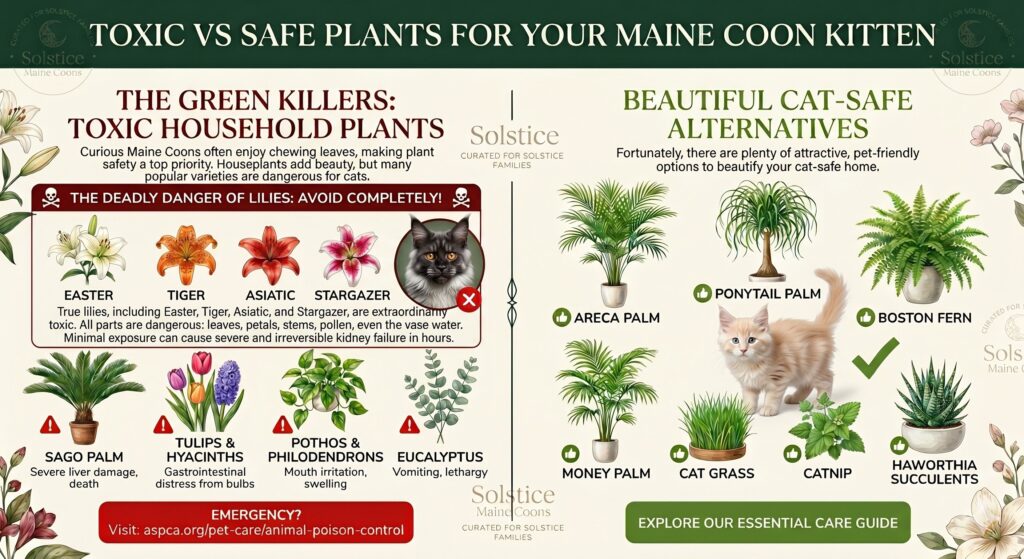
The Green Killers: Toxic Household Plants
Houseplants bring beauty into a home, but some of the most common varieties can be dangerous for cats. Maine Coons, in particular, are known for investigating leaves, chewing textures, and interacting with anything within reach.
The Hidden Danger of Lilies
If there is one plant to avoid entirely, it is lilies.
True lilies, including Easter, Tiger, Asiatic, and Stargazer varieties, are extremely toxic to cats. Every part of the plant is dangerous, including petals, stems, pollen, and even the water in a vase.
Even minimal exposure can lead to severe kidney damage within hours.
For additional reference, the ASPCA provides a comprehensive toxic plant database:
https://www.aspca.org/pet-care/animal-poison-control
Common Toxic Plants to Remove
Sago Palm
Highly toxic and often fatal. Even small ingestion can lead to liver failure and neurological symptoms.
Tulips and Hyacinths
The bulbs contain the highest concentration of toxins and can cause significant gastrointestinal distress.
Pothos and Philodendrons
Contain calcium oxalate crystals that irritate the mouth and digestive tract, often causing immediate discomfort and drooling.
Eucalyptus
Whether fresh or dried, eucalyptus can cause gastrointestinal upset and lethargy in cats.
Beautiful Cat Safe Alternatives
A thoughtfully curated home can still include greenery.
Consider:
Areca Palm
Ponytail Palm
Boston Fern
Money Palm
Cat Grass
Catnip
Haworthia varieties
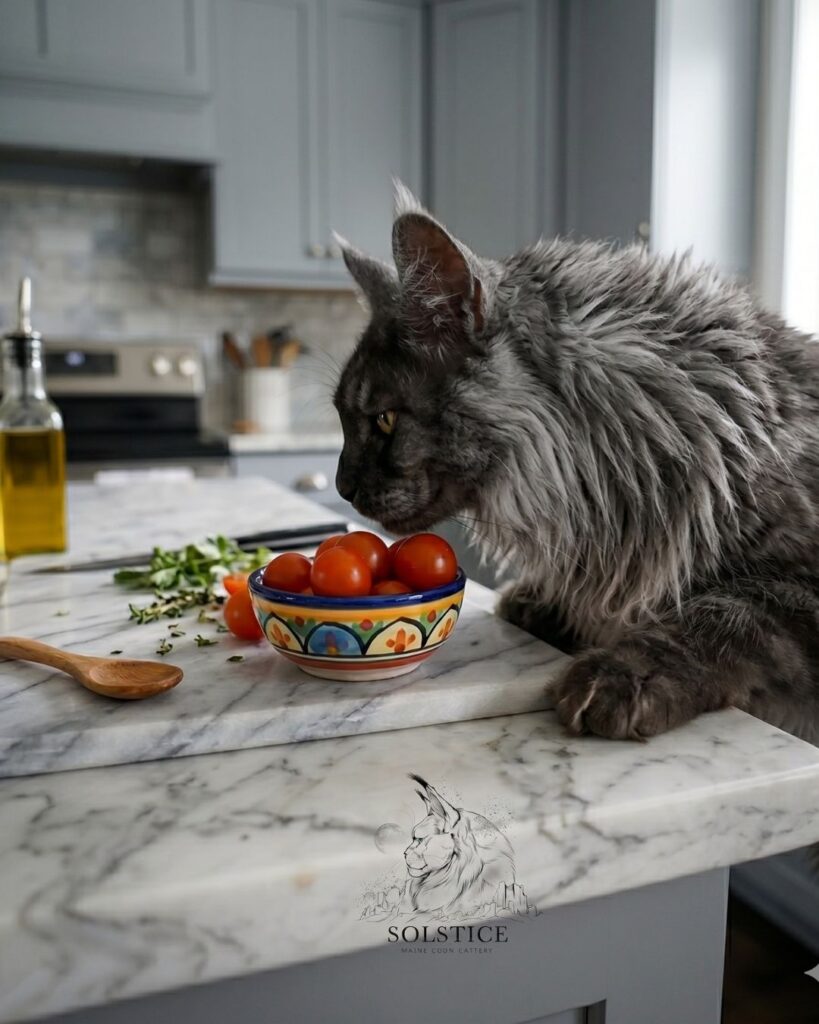
Hidden Kitchen Dangers: Toxic Foods
Many everyday foods that are harmless to humans can pose serious risks to cats.
Because Maine Coons are naturally curious and often interested in food preparation areas, awareness is especially important.
The Allium Family
Onions, garlic, chives, and leeks contain compounds that damage red blood cells and may lead to anemia.
These ingredients are found in many common foods, including:
- Soups and broths
- Sauces and marinades
- Seasoning blends
- Leftovers
Grapes and Raisins
Even small amounts of grapes or raisins have been associated with acute kidney injury in pets and should always be avoided.
The Sugar Free Consideration
Xylitol, often found in sugar free gum, candy, baked goods, and peanut butter, is a common household ingredient worth being mindful of.
While toxicity is most well documented in dogs, it remains a risk in multi pet households where food items are frequently shared or left within reach.
Chocolate and Caffeine
Chocolate and caffeinated products contain compounds that affect the nervous and cardiovascular systems.
Exposure may lead to restlessness, tremors, elevated heart rate, or more severe neurologic symptoms depending on amount ingested.
Chemical & Aromatherapy Hazards
Many household products that feel routine in daily life can pose unexpected risks for cats. Maine Coons, especially as kittens, are highly tactile explorers. Anything that touches their paws often ends up being ingested later during grooming.
Harsh Cleaners and Disinfectants
Certain cleaning products contain compounds that are not safe for feline exposure, particularly phenols found in some pine based cleaners.
Even when a surface appears dry, residue can remain on floors or countertops.
When cleaning areas your kitten may access:
- Use diluted solutions according to label instructions
- Allow all surfaces to fully dry before re-entry
- Store cleaning products securely and out of reach
- Avoid allowing kittens into freshly cleaned spaces
A simple rule of thumb is this: if you can still smell the product strongly, your kitten should not be in that space yet.
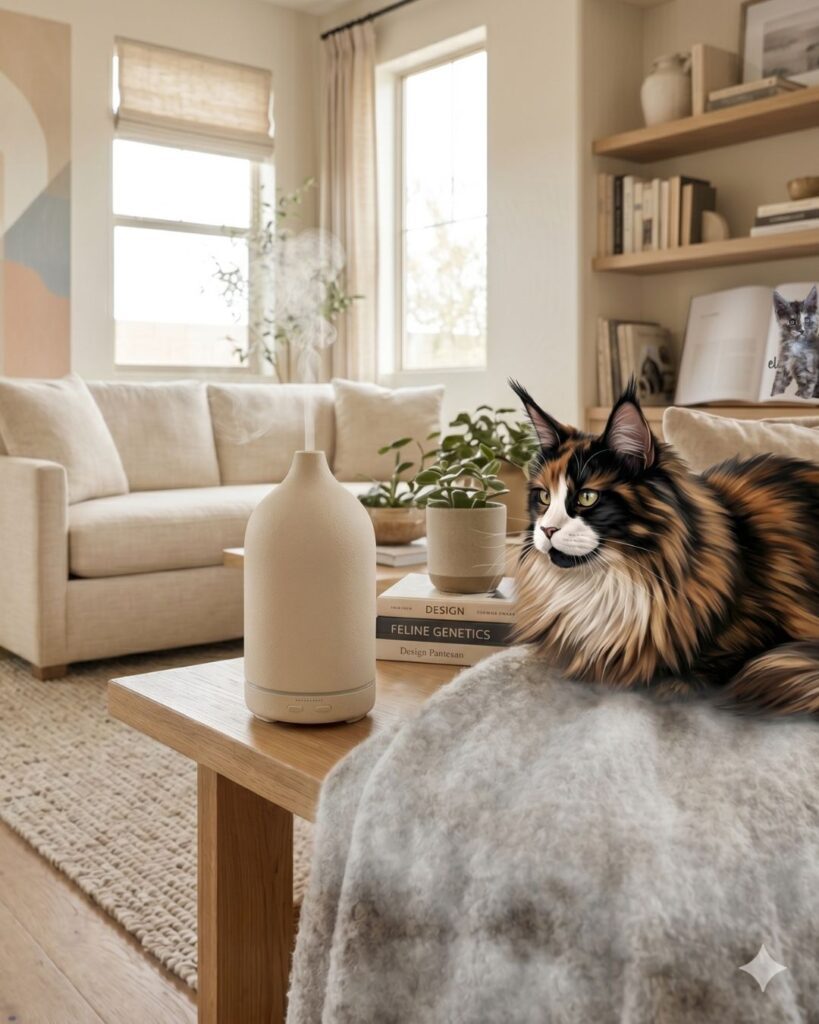
The Subtle Risk of Essential Oils
Essential oils are often considered “natural,” but natural does not always mean safe for cats.
Cats process many plant compounds differently than humans due to limited glucuronidation pathways in the liver, which can make certain oils difficult to metabolize.
Particularly concerning oils include:
Tea tree (Melaleuca)
Eucalyptus
Citrus oils
Peppermint
Pine
Cinnamon
Wintergreen
Exposure can occur through diffusers, topical contact, or accidental ingestion. Even passive inhalation in enclosed spaces may be problematic for sensitive cats.
For trusted emergency reference, Pet Poison Helpline is a helpful resource:
https://www.petpoisonhelpline.com
Physical Dangers & Everyday Hazards
Some of the most serious risks in a home are also the most ordinary. Strings, cords, and small household items can become dangerous very quickly for curious kittens.
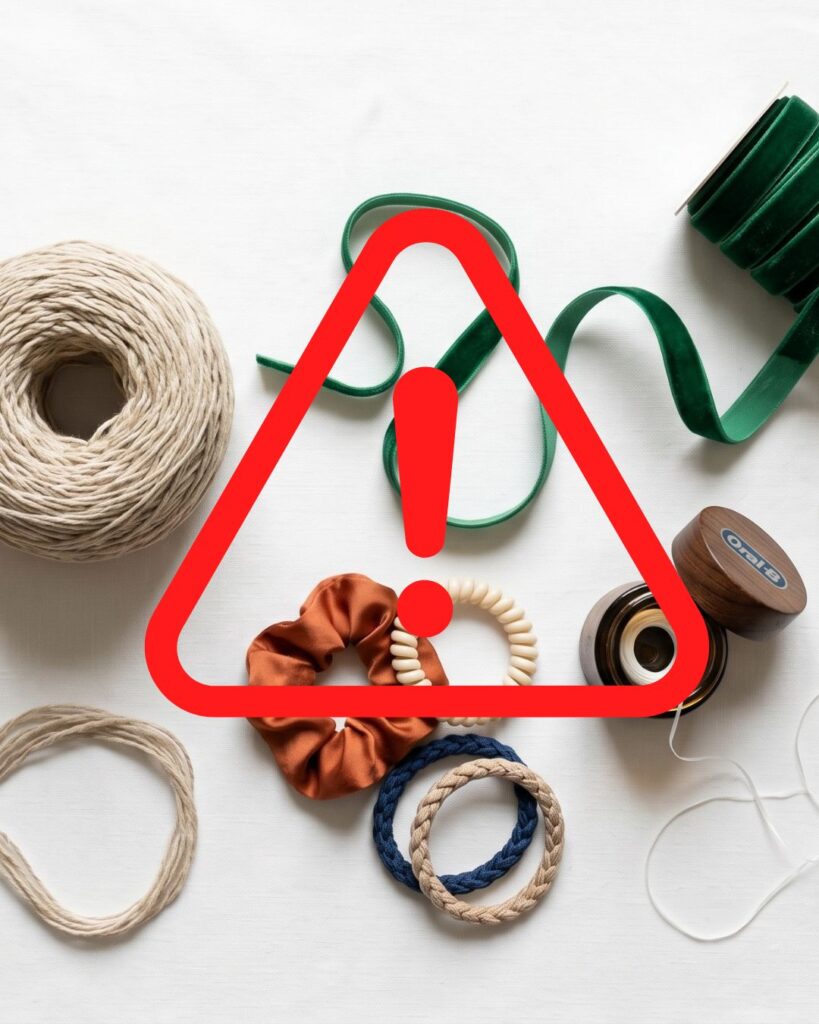
Linear Foreign Bodies
Items such as string, yarn, ribbon, sewing thread, fishing line, dental floss, and hair ties may appear harmless but can cause life threatening complications if swallowed.
These are known as linear foreign bodies.
Unlike small objects that pass through the digestive system, string can anchor in place while the rest continues to move through the intestines. This can cause the intestines to bunch or “accordion,” leading to obstruction or tissue damage.
This type of situation often requires emergency surgical intervention.
If you ever see a string or thread partially visible from your cat’s mouth or rear, do not pull it. Contact your veterinarian immediately for guidance.
Securing the Home Environment
As Maine Coons grow, their strength and reach increase significantly. Areas that feel secure for a kitten may not remain secure as they mature.
Before bringing your kitten home, it helps to review a few key areas:
Window Screens
Ensure screens are firmly secured and intact. Maine Coons are strong enough to test weak or poorly fitted frames.
Cords and Window Treatments
Blind cords and curtain ties should be secured or removed from reach whenever possible.
Hidden Spaces
Check behind and beneath large appliances and furniture, including:
- Refrigerators
- Washers and dryers
- Dishwashers
- Entertainment units
- Heavy furniture
Kittens often seek out enclosed or tight spaces when exploring a new environment.
Tall Furniture Stability
Bookshelves, cat trees, and display units should be stable and secure, especially in homes with active climbers.
Creating a Safe “Kitten Zone”
Even the most prepared home benefits from a defined starting space. A dedicated kitten room gives your Maine Coon time to adjust gradually without becoming overwhelmed by too much space too soon.
Think of it as their foundation area, where routine and confidence are built first.
Safe Room Essentials
A well prepared space typically includes:
Litter box placed away from food and water
High quality kitten food
Fresh water or fountain
Soft bedding with familiar scents
Scratching post
Safe enrichment toys
Carrier left open as a secure retreat
Comfort and Enrichment
As your kitten settles, additional elements can help support confidence and curiosity:
Cat tree or climbing structure
Soft resting spaces
Interactive toys
Window perch with secure screening
Safety Check Before Introduction
Before your kitten enters the space, confirm:
No toxic plants are present
No exposed cords or strings
No cleaning products within reach
No small objects on floors or low surfaces
Windows and doors are secure
Giving Your Kitten Time to Settle
It can be tempting to open your entire home immediately, but gradual introduction often leads to a calmer and more confident adjustment.
A smaller controlled space allows your kitten to learn where everything is, establish litter habits, and build trust in their new surroundings.
Most Maine Coons begin exploring beyond their safe room within a few days to a couple of weeks, depending on personality.
A thoughtful setup now often prevents unnecessary stress later. By preparing your environment with intention, you’re not only reducing risk, you’re creating the foundation for a confident, well adjusted companion.Bringing a new companion home involves more than just safety. For our complete checklist on premium nutrition, grooming routines, and preparing your space, explore our full Maine Coon Kitten Essentials page!
Ready to Meet Your Maine Coon?
At Solstice Maine Coons, every kitten is raised as part of our home long before they become part of yours.
We focus on thoughtful pairing, early socialization, and a calm, structured start to life so each kitten leaves us confident, well-adjusted, and ready to settle into a new environment.
Because of the time and care that goes into each litter, we do not produce kittens at scale. Every placement is intentional, and availability is naturally limited by design.
If you feel drawn to one of our Maine Coons, you’re welcome to begin the application process below.
Additional Resources
ASPCA Animal Poison Control Center
https://www.aspca.org/pet-care/animal-poison-control
Pet Poison Helpline
https://www.petpoisonhelpline.com
Cornell Feline Health Center
https://www.vet.cornell.edu/departments-centers-and-institutes/cornell-feline-health-center
American Veterinary Medical Association
https://www.avma.org